The 2026 Edinburgh Festival Fringe
.
71 countries. 3,649 shows. More than 53,000 performances.
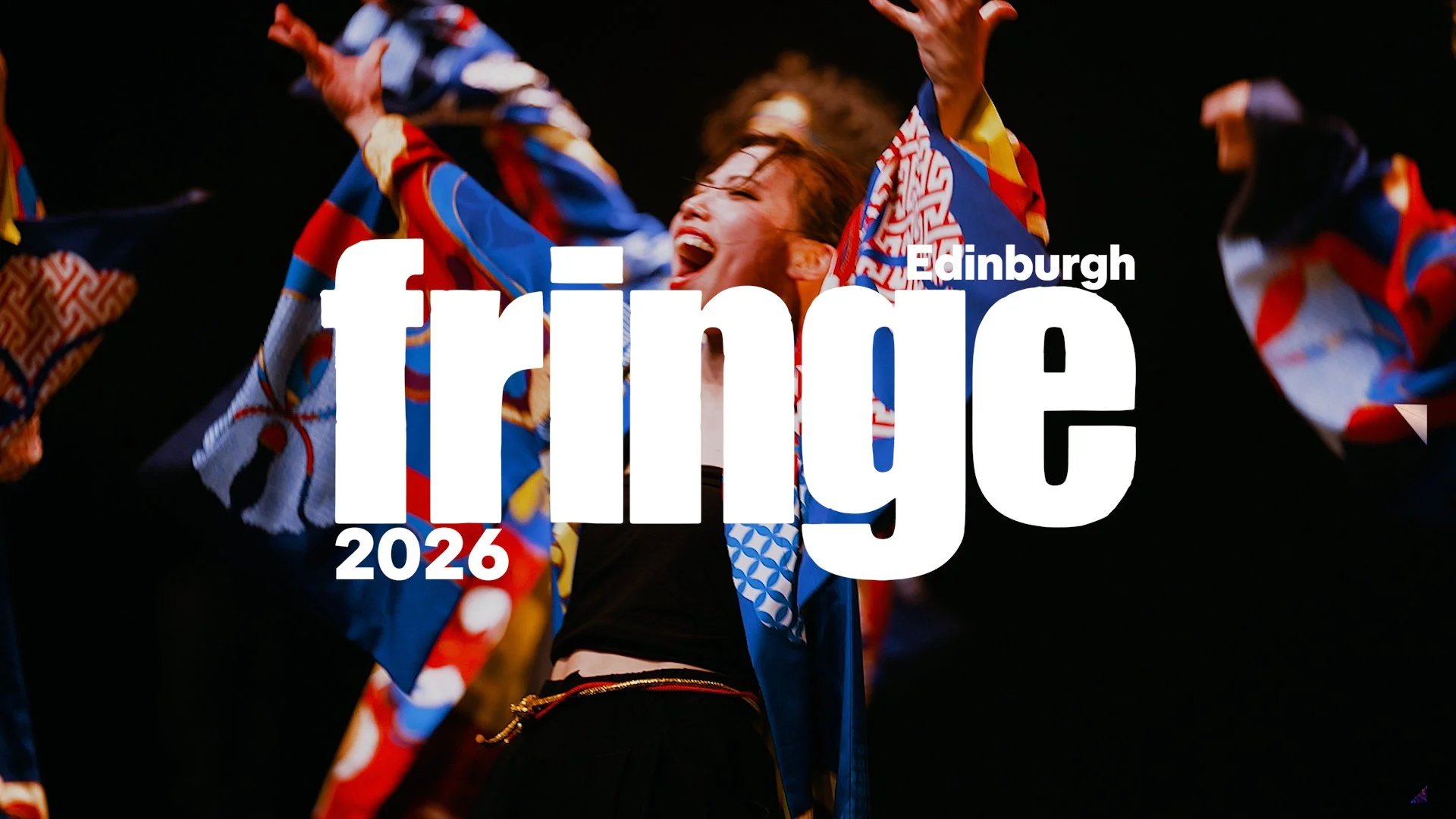
The 2026 Edinburgh Festival Fringe runs from 7–31 August and its published programme features 3,649 shows across 258 venues, creating a staggering 53,884 individual performances.
Of those shows, 1,133 are international productions, with work from 71 different countries represented in the programme.
And it isn't only the performers who travel.
Research published by Edinburgh Festivals in June 2026 found that the festivals attracted 4.09 million attendances in 2025, with audiences coming from more than 100 countries. Artists from 83 countries participated across the festivals.
For a few weeks each summer, Edinburgh really does become a meeting place for the world.
From Japan to Iran - without leaving Edinburgh
Look through this year's programmes and you quickly realise quite how varied that international influence is.
Japanese pianist Akiko Okamoto returns to the Fringe with two concerts, while Iranian musician Behnam Ghazanfaripour brings the sound of the santur - an ancient Persian instrument - to Edinburgh.
Elsewhere, audiences can experience everything from European folk songs and K-Pop to American swing through the Tutti Orchestra: Around the World concert.
At the Edinburgh International Festival, the global mix continues, with international theatre, dance, opera and music forming a major part of the 2026 programme. Its contemporary music programme alone includes West African kora music, Senegalese sounds and a Scottish-Argentinian collaboration.
You could, quite literally, experience several different cultures in the space of an afternoon.
And that's part of the magic of Edinburgh.
It's not only the performers who are international
The other side of the Edinburgh story is the audience.
Visitors from more than 100 countries don't simply arrive, watch a performance and go home.
They stay in hotels. They eat in restaurants. They use public transport. They visit attractions. They shop. They explore Scotland and interact with British businesses.
The latest Edinburgh Festivals impact study estimates that the festivals generated £558 million in net economic impact for Edinburgh and £852 million across Scotland in 2025.
That's a considerable economic impact but there's also a less tangible opportunity.
Every one of those international visitors leaves Britain with an impression of the country.
Their experience of our culture, hospitality, businesses and people becomes part of how Britain is perceived internationally.
Events such as Edinburgh therefore offer something much bigger than entertainment. They put Scotland and Britain firmly on the world stage.
Communication works both ways
There's another important side to this cultural exchange.
Edinburgh isn't simply bringing international talent into Britain. It also provides a platform from which British performers and creative businesses can reach the rest of the world.
For artists, a successful appearance can lead to international exposure, new professional relationships and opportunities elsewhere.
The Fringe's Arts Industry Office, for example, helps industry professionals find talent, programme work and make connections. In 2026, it reported accrediting more than 1,150 industry members from 53 countries.
A performance that starts in a small Edinburgh venue could potentially be seen by a promoter, producer or programmer from the other side of the world.
That's quite a shop window.
What can businesses learn from Edinburgh?
Most businesses aren't about to take a comedy show to Edinburgh.
But the communication challenge isn't actually that different.
Today, your audience can be almost anywhere.
A British manufacturer's website might be viewed by a potential customer in Germany. A product video could be watched in Japan. A LinkedIn post could reach a distributor in Spain. A training video might need to be understood by employees across several different countries.
The question isn't simply:
"Can they translate the words?"
It should be:
"Will they understand what we mean?"
Because language comes with culture, context, terminology, humour, tone and nuance.
Successful international communication takes all of those things into account.
A celebration of being understood
Perhaps that's one of the reasons Edinburgh's festivals remain so special.
Thousands of performers and millions of audience attendances come together around one fundamental idea: sharing something with another person.
Sometimes that's through words.
Sometimes it's through music.
Sometimes through movement, humour, storytelling or something that's almost impossible to categorise - this is the Fringe, after all.
But ultimately, it's about making a connection.
And in a world where businesses, communities and audiences are becoming increasingly international, finding ways to understand each other has never been more important.
At Talking Heads, we're fortunate enough to see that happen every day – helping organisations communicate across languages and cultures through translation, interpreting, localisation, subtitling and other language services.
We may not be able to promise you a standing ovation at the Edinburgh Fringe.
But helping your message make sense wherever in the world it needs to go?
That's much more our area.