
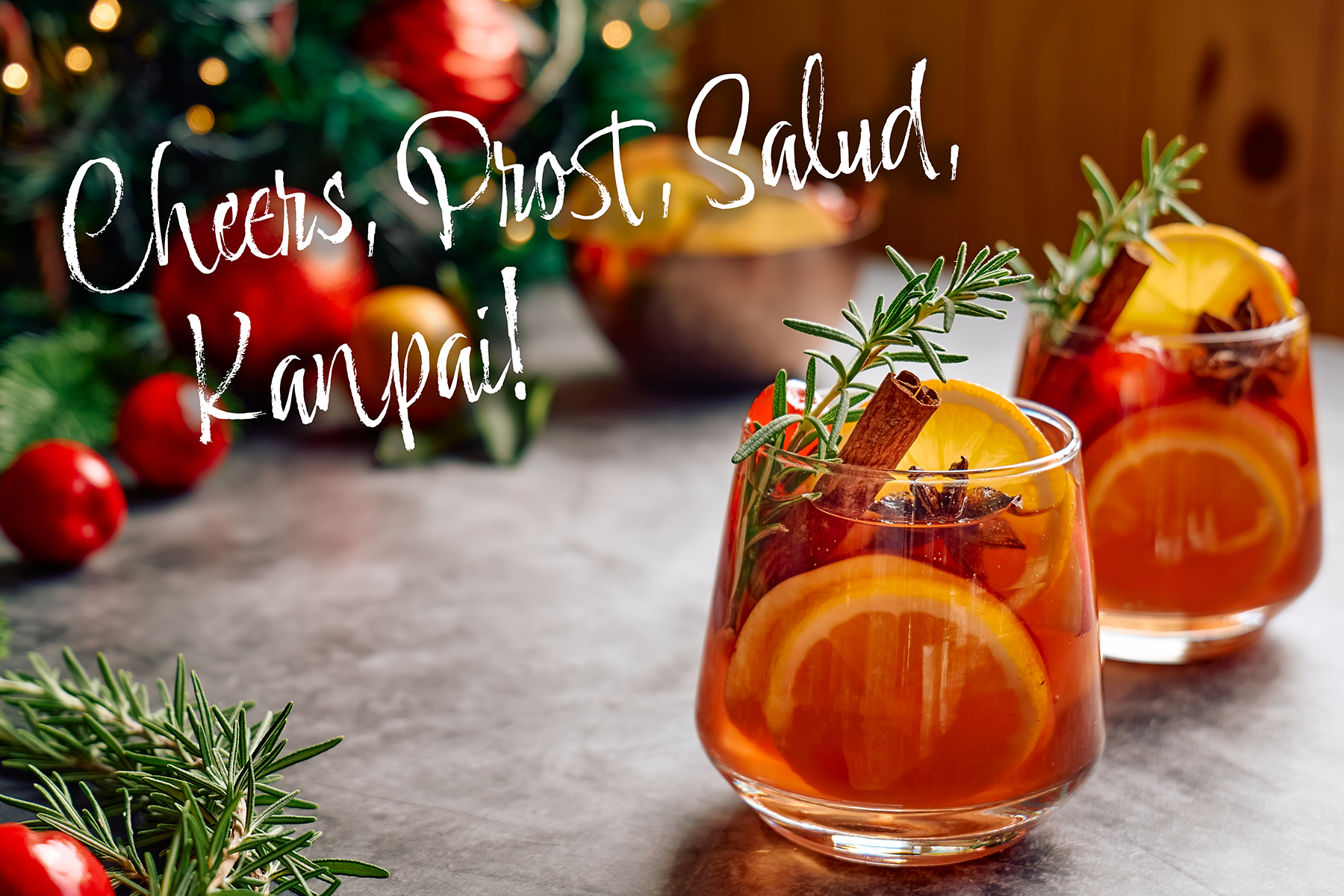
There's a moment every December when the smell of warm spices drifts over a Christmas market and you realise the festive season has properly begun. Mulled wine might be the most universal Christmas drink of all, but it goes by a lot of names, and it's only the start of the world's festive drinks list.
One drink, many names
Warm, spiced wine is a winter favourite across Europe. In Germany and Austria it's Glühwein, or "glow wine", after the hot irons once used to heat it. In Sweden and the Nordic countries, glögg is often served with almonds and raisins in the cup. The French drink vin chaud, "hot wine", while Italians prefer the more dramatic vin brulé, or "burnt wine". In Poland, look for grzaniec, from the verb meaning "to warm".
Creamy, fruity and festive
Not every Christmas drink is wine. Americans love eggnog, a rich mix of milk, cream, eggs and spice. In the UK, the Snowball, advocaat topped up with lemonade, is enjoying something of a retro comeback. In Puerto Rico, coquito, a creamy coconut and rum drink, is a Christmas essential. And in Mexico, families share warm ponche navideño, a fruit punch with cinnamon, sugar cane and guava, which children can enjoy too.
The original Christmas toast
Britain's own festive drinking tradition goes back centuries. Wassailing comes from the Old English wæs hæl, meaning "be well" or "good health". Villagers would go from house to house with a bowl of hot spiced ale or cider, wishing their neighbours good health, a sort of medieval Christmas round.
How to say cheers
Wishing someone good health is at the heart of toasts around the world:
Germany: Prost
France: Santé, meaning "health"
Spain and Latin America: Salud, also "health"
Poland: Na zdrowie, "to health"
Scandinavia: Skål
Ireland: Sláinte, "health"
Turkey: Şerefe, "to honour"
Japan: Kanpai, meaning "dry cup"
China: Gānbēi, also "dry cup", so be prepared to finish your drink
One word of caution: the Italian cin cin means something rather different in Japanese, so it's best avoided at your office party in Tokyo.
Mind your manners
Toasting comes with etiquette, and it varies. In Germany, it's important to look the other person in the eye as you clink glasses. Folklore says failing to do so brings seven years of bad luck. In Japan and Korea, you traditionally don't pour your own drink, but keep an eye on your neighbours' glasses and top them up, and they'll do the same for you. And in Hungary, some people still avoid clinking beer glasses altogether because of a long-held tradition dating back to the nineteenth century.
Not everyone drinks
It's also worth remembering that for many people, including many colleagues and customers, alcohol isn't part of the celebration at all, for religious, health or personal reasons. A warm ponche, a festive mocktail or a good cup of tea is just as welcome, and the sentiment behind a toast doesn't depend on what's in the glass.
Why it matters
Whether you're hosting international guests, sending festive gifts abroad, or just hoping to impress at the Christmas party, knowing how other cultures celebrate makes a real difference. A toast in someone's own language is a small gesture, but it's one people tend to remember.
So, whatever you're drinking this Christmas, from all of us at Talking Heads: cheers, Prost, Salud and Kanpai.